Venkatesh Surve

AI Backend Engineer
> thinking...|

View Work Get in touch
scroll

The Foundation-Level
Thinker

The pattern that shows up across every domain I've worked in: trace the problem to its root, engineer the fix at the layer where it actually lives. Not as a reflex toward complexity — but because surface-level fixes tend to resurface. Fifteen years of that across hardware, kernel work, and production AI systems.

🧠
Enterprise AI
Technical Lead at Patronus. Autonomous privacy agents, RAG pipelines, multi-agent orchestration — AI as infrastructure, not a feature.
AI-First
⚙️
Kernel Engineering
Custom Android kernels with deep Snapdragon tuning — GPU frequencies, thermal states, I/O schedulers. Software written at the hardware boundary.
C / C++
🏗️
Startup Founder
Two startups — Keytech (custom PC builds) and ModMyLaptop (laptop thermal rehabilitation). Built real products, shipped to real customers.
Founder
🔥
Competitive OC
Team Captain of HawkOC India. #1 globally on i7-9750H Cinebench R20. Finding thermal ceilings others can't reach.
HWBot · #1
🔊
ROM & Audio Modding
Custom ROMs for Sony Xperia as part of Xperia Pixel Team. Stereo speaker mods for OnePlus featured on XDA News and Beebom.
XDA Recognized
🛠️
Over Engineered Series
5 live projects solving simple problems with maximum technical sophistication. AI-managed solar, research-grade AQI analysis, IoT terrariums, and more.
OE Series

Professional Work

I've spent my career working closer to the metal than most backend engineers — from modernizing decade-old systems to building autonomous AI privacy engines that handle millions of records.

Sep 2024 — Present
Patronus
Technical Lead
End-to-end owner of Patronus's technical stack — designed, built, and deployed from scratch. The Consent Management Platform now handles 8 million user consents across 97 million banner interactions, with sub-50ms write latency and 9 months of 100% availability via an event-driven, immutable-log architecture. Latency-critical paths — including a PII vault for structured personal data storage and retrieval — were built in Golang, where Python's overhead wasn't acceptable. The harder problem was what came after: building an AI-First privacy engine where autonomous agents interpret regulations, assess data flows, and flag compliance gaps — with a specific focus on India's DPDP Act alongside GDPR and CCPA. The flagship piece: a DPDP-compliant browser automation agent built on a fine-tuned Gemma 4 (31B) model, trained on 12,000 pages of user journeys and compliance data. A 3-layer context compression architecture (semantic pruning, delta compression, full compaction) achieves 5–10x token efficiency vs standard browser agents. On an internal benchmark against frontier API models, the fine-tuned model ranked first, at lower latency and cost. The DPIA Agent conducts impact assessments and surfaces compliance gaps for human sign-off, cutting turnaround from 3 weeks to 1 week. The goal was not to replace legal judgment but to eliminate the slow, manual parts of the loop entirely.
Multi-agent orchestration LLM pipelines Model fine-tuning Privacy engineering Hyperscale backend Golang
Aug 2023 — Jul 2024
RadiXplore
Software Development Engineer
Built a serverless RAG-based document intelligence pipeline using LangChain and AWS Lambda, managing a terabyte-scale vector index in self-hosted Elasticsearch. The bottleneck was never the LLM — it was retrieval latency. Solved it by going deep into Elasticsearch internals and vector embedding dimensionality: tuning sharding strategies, memory mapping, and where the pipeline was wasting cycles. Queries that took 15 seconds came down to 2–3. The pre-processing problem was equally non-trivial: built a high-throughput Rust microservice wrapping pdfium, tuned specifically to the structural variance of our document corpus — off-the-shelf extraction pipelines couldn't handle it at terabyte scale without choking. Measurable throughput gains over the Python baseline. Real-time document interaction demands real-time retrieval.
RAG / LangChain AWS Lambda Elasticsearch Vector embeddings Rust
Jun 2022 — May 2023
Disecto
Software Development Engineer
Containerized a legacy Django monolith into a microservices architecture. The real work was in Celery: refactoring workers for genuine parallel execution rather than the illusion of it. The same 100GB of unstructured data — images, documents, presentations — went from 13 hours to 4. Getting distributed task queues to behave correctly under load is a different problem from getting them to run at all. Also built document intelligence across 8 file types using Elasticsearch for indexing and switched from Tesseract to PaddleOCR for meaningful accuracy gains on dense document layouts.
Django Celery Docker Microservices Elasticsearch PaddleOCR
2019 — 2022
Independent
Backend Freelancer · Django Stack
Freelance backend work running in parallel with Keytech, community modding, and competitive overclocking — before transitioning into full-time employment. Django stack: APIs, data pipelines, integrations. Real client work is a different discipline from side projects; timelines are fixed and ambiguity is expensive.
Django REST PostgreSQL API design

Built With
These Tools

Five years of production engineering across AI pipelines, backend systems, and cloud infrastructure — built on 15 years of hardware-software work in kernel tuning, competitive overclocking, and embedded systems. These are the tools I reach for — not just to ship with, but to tune, debug, and swap out when something better exists.

AI & LLM
LangChain LangGraph Ollama PydanticAI RAG pipelines Multi-agent orchestration Prompt engineering OpenAI API Multi-provider inference routing LLM fine-tuning
Backend
Python Django / DRF FastAPI Flask Golang Celery PostgreSQL MongoDB SQLite Redis REST & WebSocket APIs
IoT & Embedded
Raspberry Pi Pico W ESP32-C6 MicroPython uasyncio I2C / SPI / GPIO Home Assistant
Systems & Kernel
Linux kernel (C/C++) Rust Android (AOSP / Magisk) MicroPython firmware
Data & ML
Elasticsearch Vector embeddings Prophet forecasting STL decomposition Pandas / NumPy
DevOps & Cloud
Docker AWS (Lambda, S3) Azure Git / GitHub Actions

Built Two, Before
I Had a Playbook

Both built from scratch, both solving real hardware problems at the source — not the symptom.

Keytech
2017 – 2021
Alumni
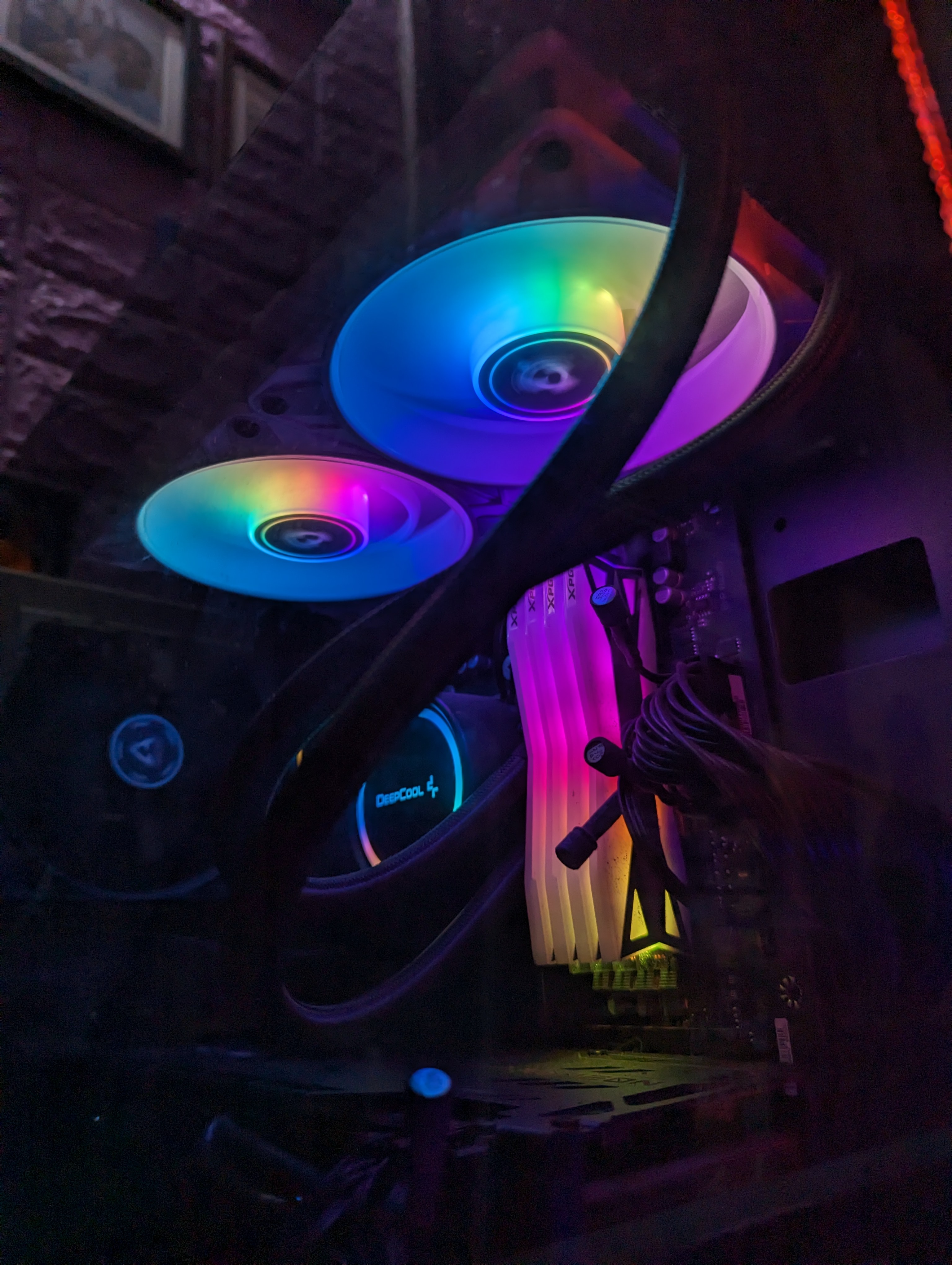
Keytech — custom gaming PC build with DeepCool AIO cooler and RGB RAM
Custom PC builds with a specific design philosophy: hardware recommendations matched to actual use case, balanced airflow engineered first rather than bolted on, clean cable routing that doesn't fight thermals. Not a reseller — a systems integrator who knew why each component was chosen and how it would behave at load.

Built and shipped 84 gaming desktops and 4 professional-grade firewalls over four years. Shut down in 2021 when COVID-era hardware supply disruptions made the business untenable — lead times and margins both collapsed simultaneously.
84
Gaming desktops built
4
Enterprise firewalls
4 yrs
Operating
ModMyLaptop
2021 – 2022
Alumni
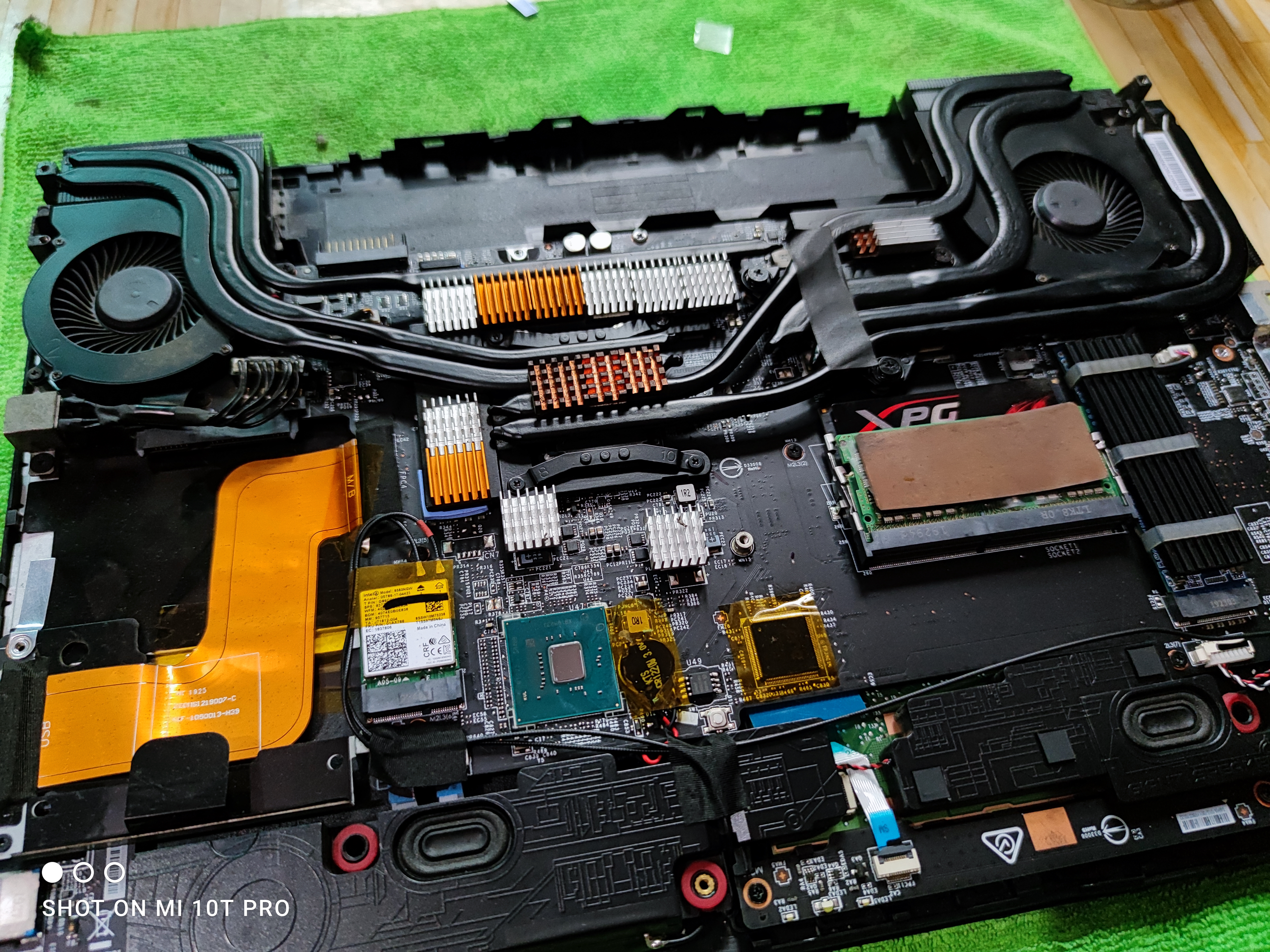
ModMyLaptop — gaming laptop fully disassembled showing heatpipes, VRM and XPG RAM
Thermal throttling in gaming laptops is well-understood. The standard fix — repasting — addresses the most visible symptom. ModMyLaptop went further: diagnosing why throttling persisted after a repaste, tracing it to VRM layout, chassis airflow dead zones, and power delivery headroom — problems most service centres weren't set up to investigate.

Liquid metal application — uncommon in India — was offered with custom 3D-printed ABS collars around the CPU die to contain migration during transport. Compounds used: Thermal Grizzly Kryonaut, Kingpin KPX, and liquid metal variants. Shut down after a year — the diagnostic depth required for each job made it impossible to scale without compromising the quality that made it worth doing.
62
Laptops serviced
4
Liquid metal jobs
+22%
Avg performance gain
Built in
the Open

The measure of this work isn't the code — it's whether strangers trusted it on their daily-driver device. Everything was published, documented, and maintained. No private forks, no "works on my machine."

OnePlus & Redmi Era · 2018–2020
The audio mod work that XDA News and Beebom covered — and the kernel engineering that gave the Redmi K20 Pro its competitive edge. Each project shipped stable, documented, and SafetyNet-clean.
Featured · 10+ Publications
Stereo Speaker Mod
OnePlus 6 · 746 replies · v8
Repurposed the earpiece as a secondary speaker via Tavil Mixer audio routing — transforming a mono bottom-firing device into a true stereo experience. Eight versions across 38 pages of community threads. Integrated into the NoLimits custom ROM. Picked up by 10+ publications within days of release.
Tavil MixerMagiskAMLShell
Audio · 661 replies · 104 likes
Stereo Speaker Mod
OnePlus 6T · Oct 2018
Rebuilt for the 6T with AML compatibility, fixed audio sync delays between earpiece and main driver, and resolved speakerphone conflicts. Three production versions, each solving issues the previous one uncovered. 104 likes on the original post.
Tavil MixerAMLMagiskShell
Kernel · SafetyNet Clean
Quax Kernel
Redmi K20 Pro · Snapdragon 855
Deep Snapdragon 855 tuning: additional GPU frequencies at 675MHz, Adrenoboost, Nap low-power GPU state, Maple I/O Scheduler, LZ4 + F2FS, SLIMbus overclocking, USB fast charging toggle. 35 commits, 8 releases. SafetyNet passed throughout. 97.3% C/C++.
C / C++Adreno 640Maple I/OF2FSSafetyNet

Sony Xperia Era · 2012 · Xperia Pixel Team · Where it started
The foundation. Before audio mods and kernel work, I was building full custom ROMs as a member of the Xperia Pixel Team — crafting complete Android experiences for Sony hardware. The ROMs were covered by international tech press.
ROM
Dynamic™ ROM
Sony Xperia U & Xperia P · ICS
Full custom ROM with Mali 400 GPU tweaks, Galaxy S III launcher integration, AOSP audio enhancements, and EXT4 claiming 2× the speed of stock. Supported both locked and unlocked bootloaders. Shipped across two Xperia devices simultaneously.
Mali 400CWMICS / Android 4.xeXperia Terminator
ROM · 322+ replies
Infinity™ ROM
Sony Xperia U · All Bootloaders
AOKP and CM experience on stock ICS. Three versions, each a genuine architectural evolution — ending at v3 with DSP Manager audio, Oscar Launcher, Xperia JB statusbar, built-in bloatware remover, and SuperSU. Marketed (and received) as "5× smoother than previous versions."
AOKPCyanogenModDSP ManagerBass BoostApollo
Also shipped
AOD Customisation Mod · MIUI 11 Dual Speaker + Volume Boost · K20 Pro / OP7 Pro / Nord

Competitive Overclocking · HWBot · Enthusiast League
HawkOC India grew alongside ModMyLaptop — both rooted in the same obsession with thermal limits. No access to liquid nitrogen meant building the tools that weren't available. The results were earned through engineering, not equipment budgets.
🏆 Global #1
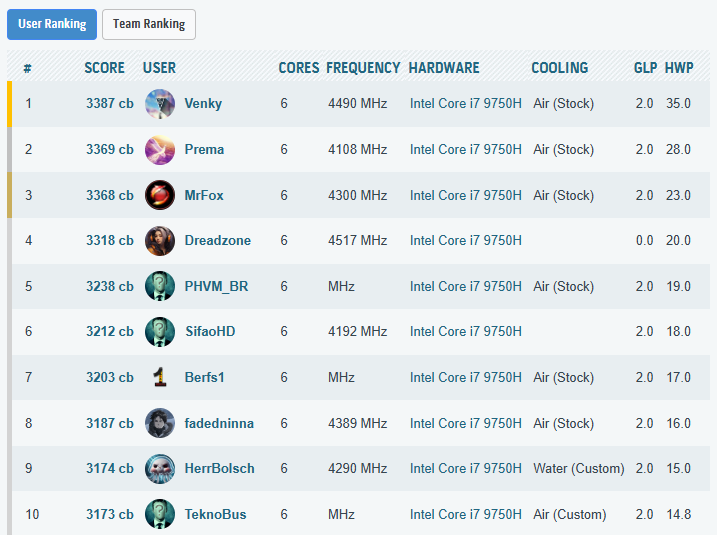
Cinebench R20 · 3387 cb
Intel Core i7-9750H · Standard Category · MSI GL65
The ceiling benchmark for i7-9750H — cited on TechPowerUp as the reference for that 6-core architecture. Achieved on the MSI GL65 via -125mV core/cache undervolting in ThrottleStop, PL1/PL2 power limit removal, prochot offset tuning, and RAM overclocking. Topped both i7-9750H and GTX 1650 benchmark charts simultaneously. Power limit unlocking on this platform is uncommon and requires working around firmware-level restrictions.
HWBot i7-9750H Cinebench R20 leaderboard — Venky ranked #1 globally with 3387 cb
ThrottleStop-125mV UVPL1/PL2 bypassRAM OCProchot offset
Team Lead · India Rank #4
HawkOC India
HWBot · Enthusiast League · Custom Cooling
Founded and captained HawkOC India to #4 in the country. Without LN2, the team built custom cooling pads with high-CFM server fans directed precisely at heatsink fins — and experimented with Peltier cooling to push below ambient. Not the standard Enthusiast league approach. The engineering went into the tooling before it went into the benchmark.
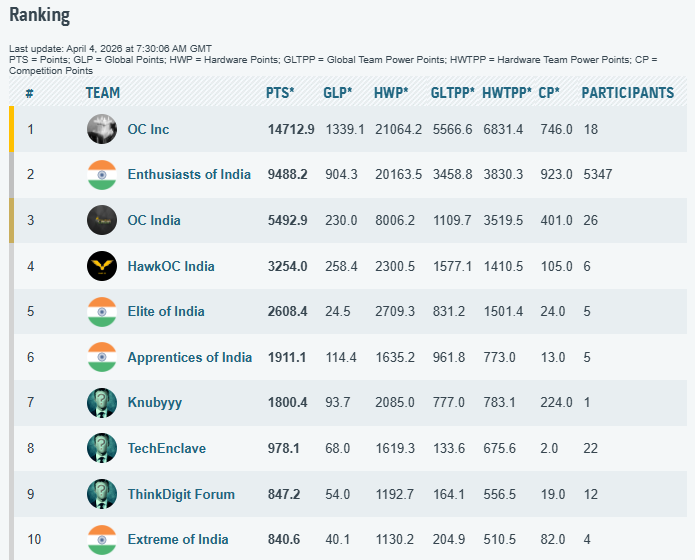
HWBot team leaderboard — HawkOC India ranked #4 nationally
Ryzen 9 5900XRX 6700 XTServer fan rigsPeltierHWBot

Deliberately Disproportionate

A personal series of projects that solve simple problems with elaborate, unnecessary sophistication. Each one is production-grade, running live, and fully documented. Proportionality was never the point.

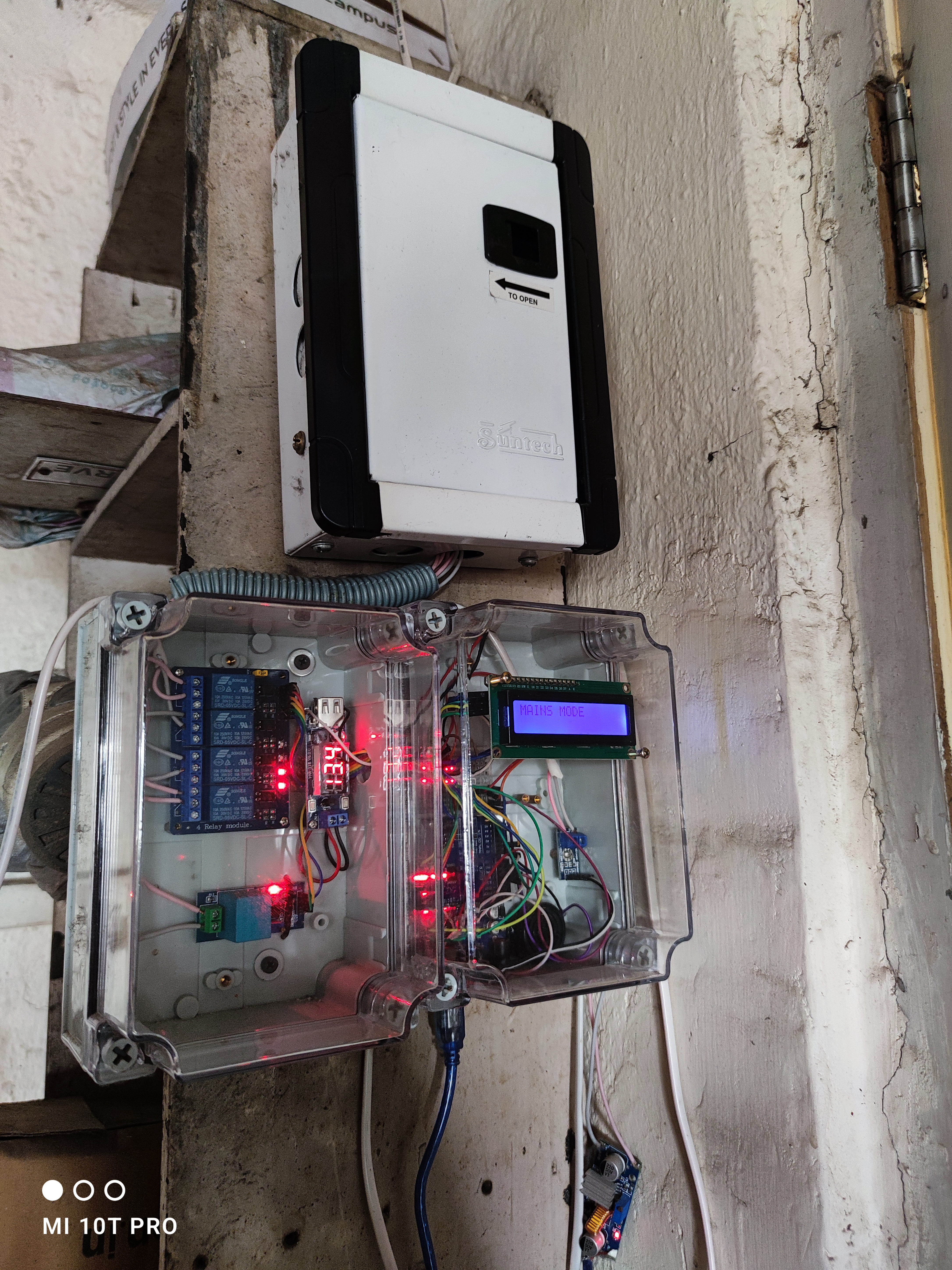
Smart Solar PCU — Raspberry Pi Pico W with relay board managing off-grid solar switching
OE — 01
Smart Solar PCU
Replaced a ₹500 relay with an LLM agent running an OODA loop.
A 165W off-grid solar setup where grid/solar switching is managed by a Pico W running a FastAPI server and an Ollama LLM agent. The agent doesn't react to voltage — it reasons: Coulomb counting for accurate state-of-charge, OpenWeather forecasts to prevent deep discharge before cloudy days, and a SQLite log of past decisions that the agent reviews to improve future ones. Break-Before-Make relay isolation, rate limiting, emergency overrides. Live since 2022.
1,000+kWh generated
3+ yrsLive uptime
OODADecision loop
Raspberry Pi Pico W MicroPython FastAPI Ollama · llama3.1 SQLite OpenWeather API 4-ch relay
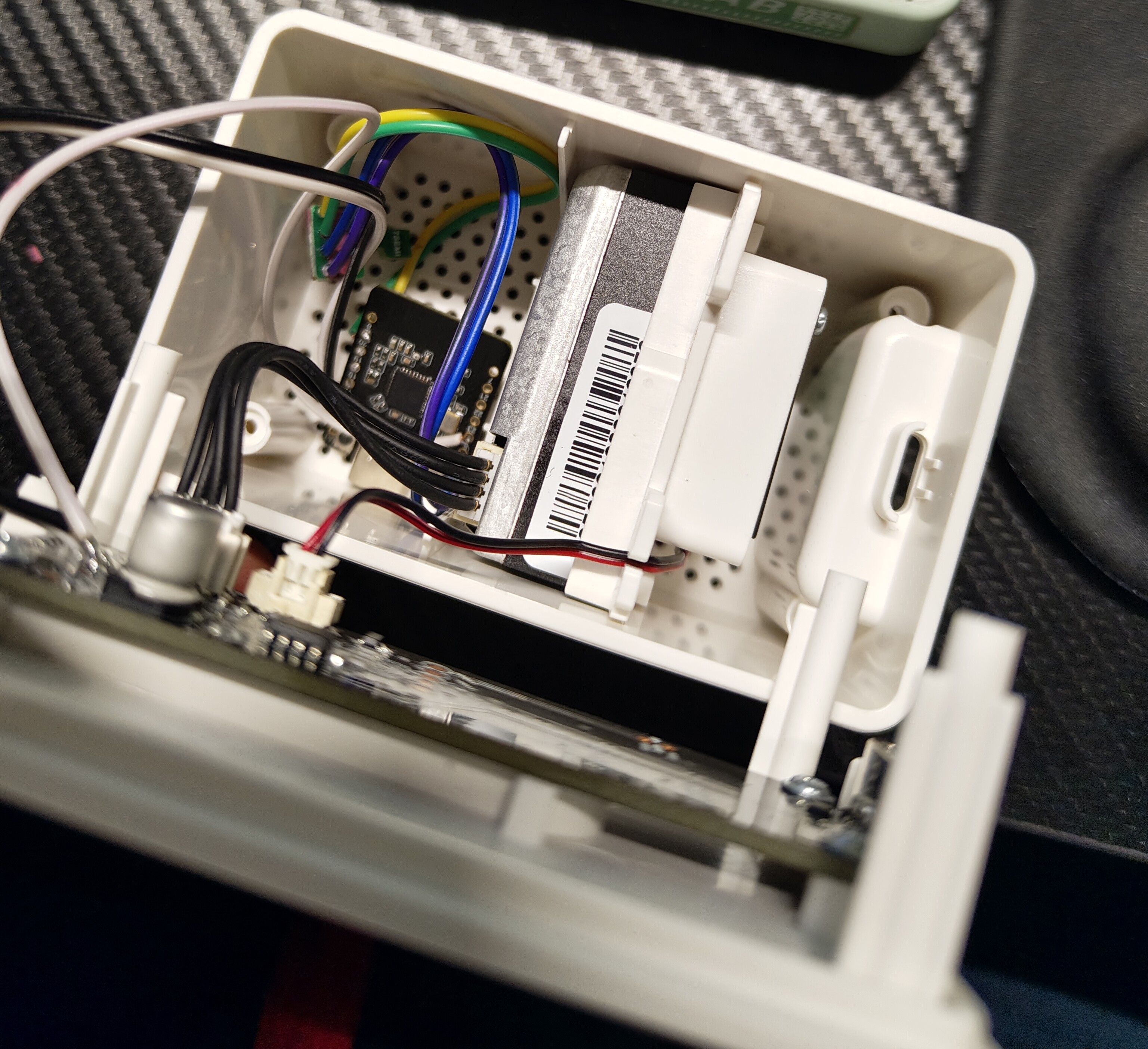
IKEA VINDRIKTNING internals — ESP32-C6 board wired to PM1006 sensor UART line
OE — 02
Air Memory
Turned a ₹999 IKEA sensor into a research-grade atmospheric intelligence platform.
Tapped the UART line of an IKEA VINDRIKTNING, wired in an ESP32-C6 running Tasmota, and built an 11-month continuous telemetry pipeline on top. The analysis layer runs STL decomposition, Lomb-Scargle periodograms, Prophet forecasting, and cross-validates local readings against ESA's CAMS satellite reanalysis. A 3D-printed HEPA filter housing with three PWM fans at 186 CFM handles mitigation. An LLM generates daily air quality narratives. The IKEA LED still works.
11 moContinuous data
12-stageData pipeline
ESASatellite validation
ESP32-C6 Tasmota Prophet STL decomposition ESA CAMS MiniMax LLM 3D-printed HEPA
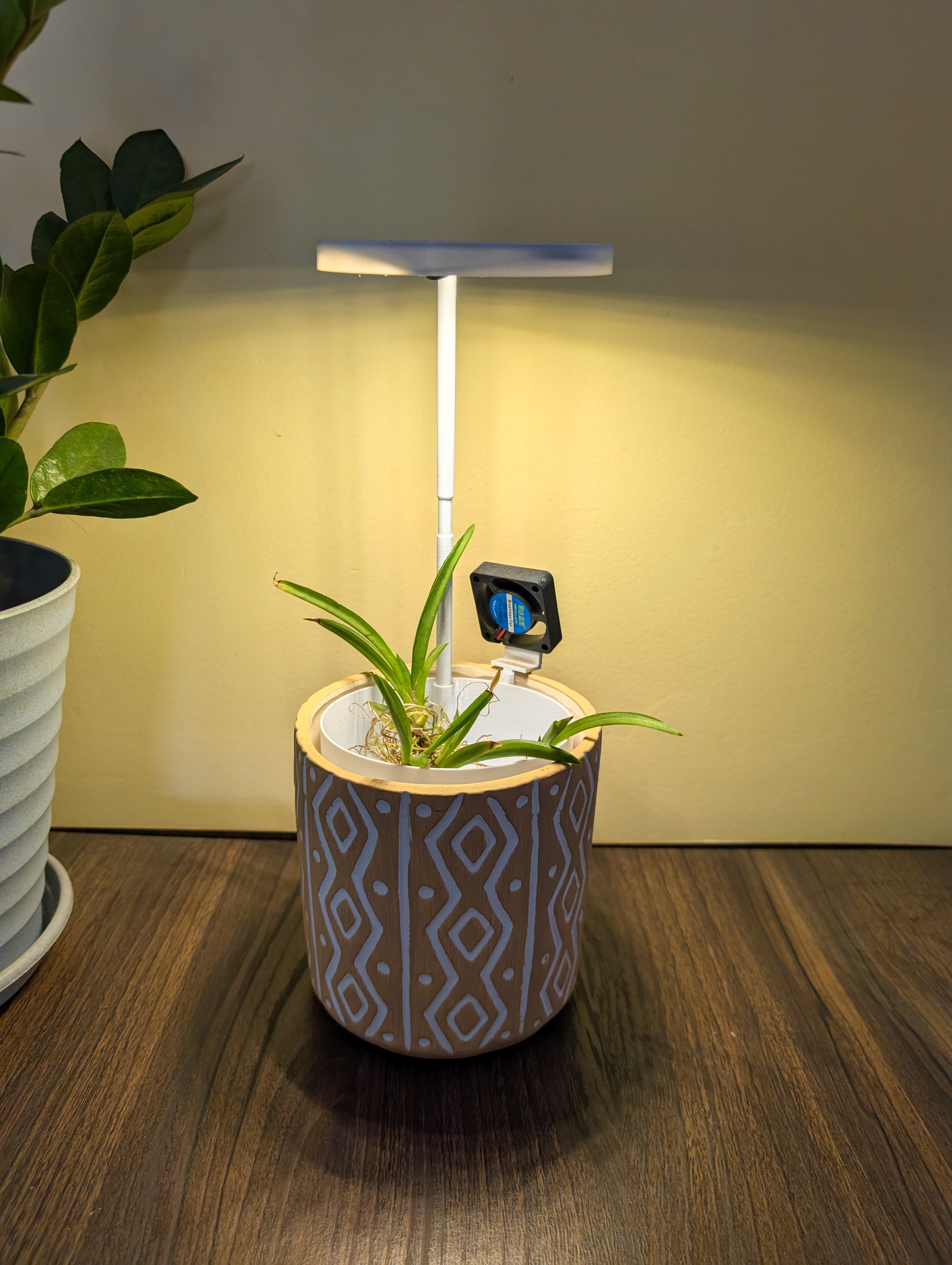
Over Engineered Orchid Planter — Pico W with sensors and 3D-printed bioreactor in a clay pot
OE — 03
Orchid Planter
Replaced a ₹200 timer with a 9B-parameter neural network and a 3D-printed bioreactor.
A Tolumnia orchid watered by a Qwen 9B model running locally via Ollama. The model receives sensor telemetry — temperature, humidity, soil moisture — and computes Vapor Pressure Deficit to decide when to trigger a flood-and-dry cycle. An OODA loop runs continuously; biological constraints (15-minute flood cap, no nighttime watering) are hard-enforced in firmware. The LLM outputs structured JSON tool calls. The hardware obeys. The orchid has opinions.
9BParameter model
VPDWatering logic
LocalZero cloud
Raspberry Pi Pico W MicroPython · uasyncio FastAPI Ollama · Qwen 9B SQLite 3D-printed bioreactor
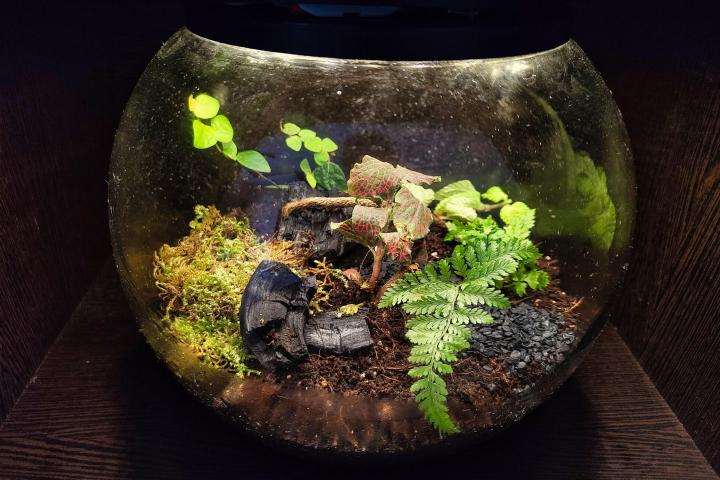
EcoSphere — smart terrarium with Pico W, SHT41 sensor, relay-controlled humidifier and grow lights
OE — 04
EcoSphere
Replaced a spray bottle with an AI-vetted, React-dashboarded, relay-controlled microclimate.
A smart terrarium for tropical plants that automates temperature, humidity, lighting, and misting via a 4-channel relay. The SHT41 sensor reports every 10 seconds to a Flask API backed by SQLite. A React/TypeScript dashboard with Framer Motion animations renders the live environment. Before adding a new plant species, a Gemini API call runs a compatibility check against current terrarium conditions. Running stably for over a year. Commercial equivalent: ₹30,000+. This build: ₹2,500.
1+ yrStable uptime
10sSensor polling
₹2,500vs ₹30k commercial
Raspberry Pi Pico W MicroPython Flask React · TypeScript Gemini API SHT41
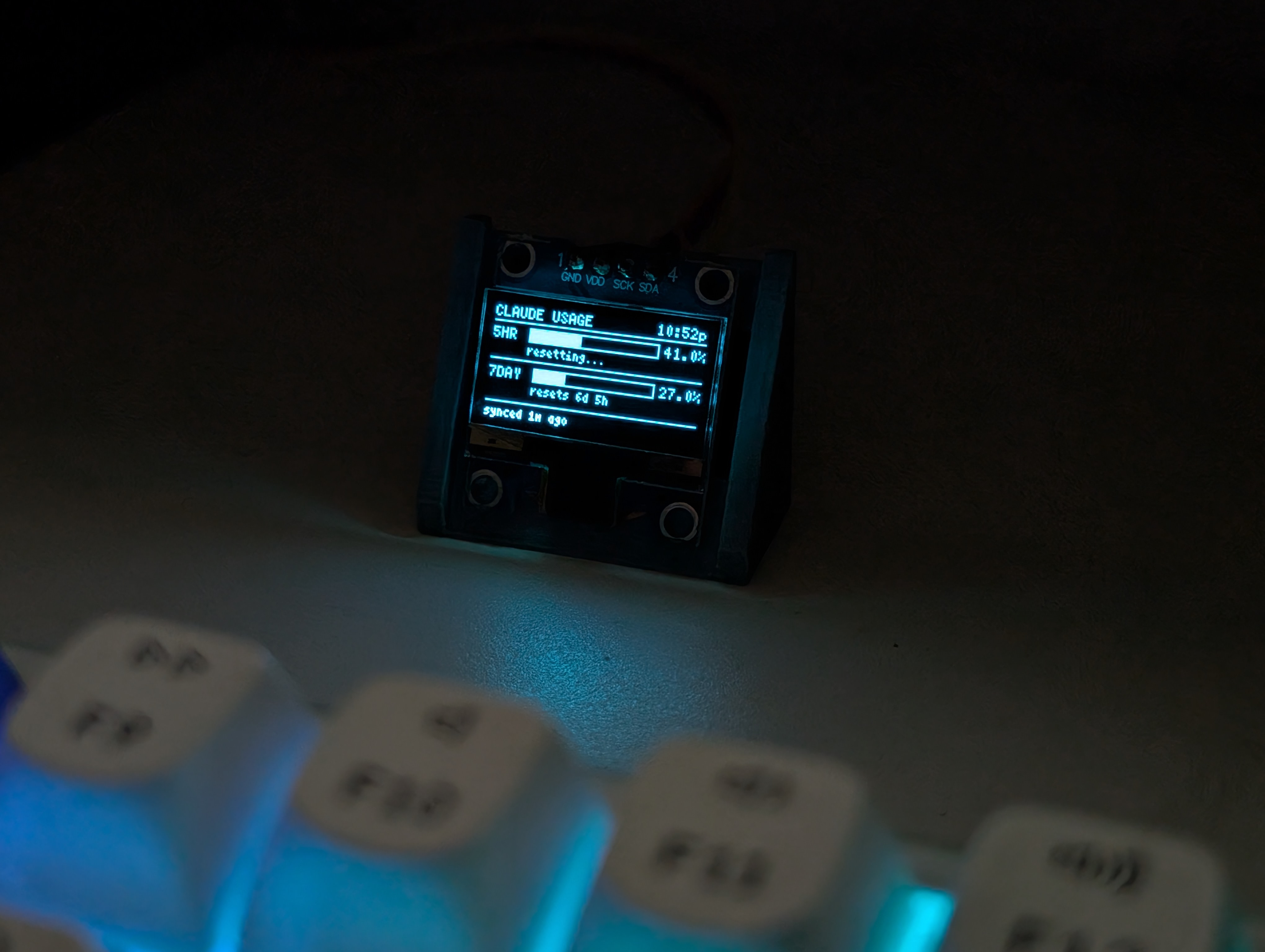
Claude Usage Monitor — Chrome extension heatmap alongside ESP8266 OLED desk widget
OE — 05
Claude Usage Monitor
Because Claude doesn't tell you how close you are to the limit, and that is unacceptable.
A Chrome extension (MV3) that polls an undocumented Claude.ai API endpoint every 5 minutes and renders a 14-day usage heatmap with live progress bars. When the browser closes, an ESP8266 NodeMCU with an SSD1306 OLED continues tracking via NTP time sync and local network push from the extension. Automatic session cookie rotation keeps the connection alive. Zero telemetry to any external server — all data stays on-device.
14-dayUsage heatmap
OLEDDesk widget
ZeroCloud telemetry
Chrome MV3 JavaScript ESP8266 NodeMCU SSD1306 OLED Arduino C++ WiFiManager

Every project is live. Every one is documented.

Five systems, zero practical justification, impeccable execution. The full catalogue has build logs, schematics, BOM costs, and the AI reviews rating each one on overkill factor.

View Full Catalogue ↗

Right Tool.
Right Amount.

The counterpoint to Over Engineered. Real problems. Boring stacks. Ships before the deadline. No LLMs doing arithmetic. No Kubernetes for a side project. No blockchain anywhere. Just the right tool, the right amount of it, and software that works.

AE — 01
IndITR
A conversational Indian tax agent. The LLM collects data. Python computes tax. These two never switch roles.
Every year around mid-July the same panic sets in: Form 16 in inbox, Zerodha P&L downloaded, ClearTax asking to upgrade to Pro, IT portal timing out. I'm a software engineer who builds systems handling millions of users — why can I not file my own taxes?

IndITR is the fix. A LangGraph state machine that interviews you conversationally, parses Form 16, Zerodha/Upstox P&L, and bank statements — then hands everything to a pure Python tax engine with zero LLM involvement. The engine has hardcoded slabs, tested surcharge brackets, verified 87A rebate logic, and deterministic capital gains aggregation covering every Budget from 2024 through 2026. 301 tests. >85% coverage. BYOLLM: works with Ollama, OpenRouter, DeepInfra, or anything OpenAI-compatible. Run it fully local: your financial data never leaves your machine.
301Passing tests
4-actLangGraph pipeline
ZeroLLM in tax engine
LocalZero cloud required
LangGraph LiteLLM · BYOLLM FastAPI Pure Python engine pdfplumber Pydantic v2 SQLite · SqliteSaver RAG · bge-small-en Ollama

Because sometimes, adequate is perfect.

Every project in this series exists because I was personally annoyed by a problem and decided to fix it properly. Style points optional. Working in production: mandatory.

More on GitHub ↗

What Makes the
Difference

Not principles I found in a book — the pattern I noticed after the same failure modes kept showing up, mine and everyone else's.

01
I own the whole thing
Backend, frontend, AI pipelines, DevOps, IoT firmware, hardware — I've built all of it, sometimes on the same project. Not because I enjoy context-switching, but because I've seen what happens at the seams: context drops, assumptions travel unchecked, and nobody actually owns the outcome. I'd rather own the whole thing and be wrong once than hand it off and spend a week tracing where the information got lost.
02
I start at the constraint, not the profiler
Most engineers see a slow pipeline and open a profiler. I start somewhere else — memory bandwidth, thermal state, power delivery headroom. Not because it's interesting (though it is), but because that's where AI systems and data pipelines actually hit their ceilings. Years of overclocking and kernel work make this instinct hard to turn off. Usually it's right.
03
The fix is always one layer down
At RadiXplore, the bottleneck wasn't the LLM — it was how vectors were indexed in Elasticsearch. At Disecto, Celery wasn't slow because of load — the workers weren't genuinely parallel. At Patronus, compliance wasn't slow because of people — the loop itself was manual. I've learned to start one layer below where the problem first appears. That's where the fix actually lives.
04
I've been on-call for those numbers
97 million banner views. 8 million user consents. Terabytes of documents retrieved in real time. I've been on-call for those numbers, with real consequences for latency or failure. No staging environment approximates that — and it changes how you reason about reliability. You stop asking "will this work?" and start asking "what's the failure mode when it doesn't?"

Let's Talk

Open to senior engineering roles — backend, AI infrastructure, or anything at the intersection. Also happy to talk about overclocking, kernel work, or why your solar setup is underperforming.